

Cities and Climate Change: Urban temperature
Cities and Climate Change is a series of articles, where we are exploring how cities and urban areas are affected by the climate crisis. Besides introducing the challenges cities are facing, our aim is also to discover how cities can be the drivers of change. Therefore, each article will also focus on discovering solutions and best practices of enhancing cities’ resilience, too. In this part, we will take a look at how climate change and its effects are influencing the temperature in urban areas
Source: Shutterstock
The first article introduced the general background on how cities already are or will be affected by climate change. The rest of the articles are focusing on specific challenges cities are facing.
As the first article explained, cities are becoming centres of people, consumption and economic activities. Hence, urban areas are also responsible for the vast majority of greenhouse-gas emissions. However, cities also have significant responsibility in tackling these challenges. Ideally, well-thought-out urban development plans consider all environmental, social and economic aspects. Cities aim to provide appropriate services and a decent level of quality of life to their citizens, but this endeavour is often disrupted by the effects of climate change.
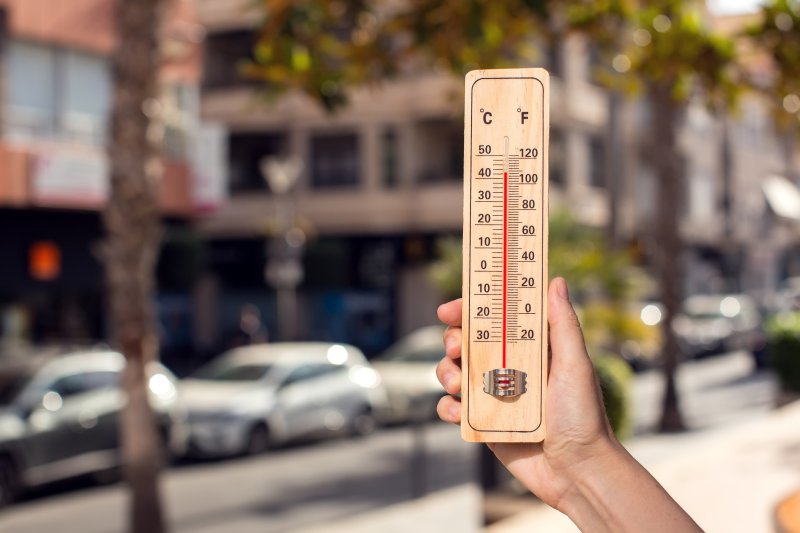
Increasing temperatures, heatwaves and urban heat islands are affecting urban systems, having implications on our everyday lives. As a result of climate change, cities are experiencing warmer global average temperatures with more frequent and intense heatwave episodes, pressuring urban systems in several ways. As projections show, under a high-emission scenario cities like Bucharest, Madrid and Zagreb might face a temperature increase of 7 °C in the hottest months compared to the current conditions. Additionally, maximum temperatures during heat waves are also likely to increase, while higher winter average temperatures are expected, too. Urbanised areas are further affected by the urban heat island (UHI) effect, which causes even higher temperatures in cities compared to rural areas (EEA, 2020). As a result of anthropogenic impacts and urbanisation, urban areas’ heat capacity is increased, and cities become islands of higher temperatures where natural landscape elements are replaced by urban structures. Built environments and structures such as buildings, roads and other infrastructure elements are more likely to absorb and re-emit the sun’s heat more than natural elements, resulting in higher temperatures compared to the less urbanised outlying areas (EPA).
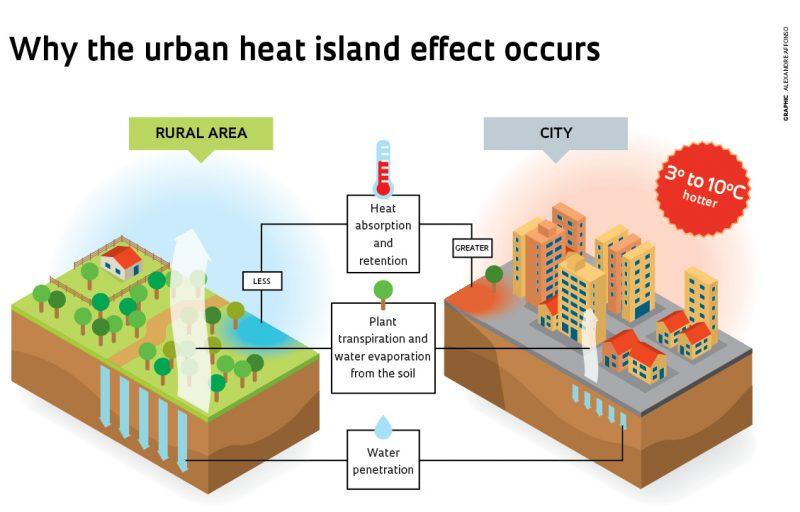
Figure 1 - Infographics on urban heat island effect - Source: Land8
Higher temperatures are both challenging for settlements, cities and urban infrastructure elements. Nowadays, as increased temperatures are often accompanied by urban growth, extreme heat risks are affecting over half of the population. Health risks are likely to arise unevenly among the urban population: higher levels of mortality are expected among the elderly populations during heatwaves, while concentration and cognition impairment due to dehydration are affecting both children and adults. Warmer temperatures have economic impacts, too: heatwave events are resulting in a drop in both labour productivity levels and economic output. Projections show that urban labour capacity might decrease by 20% in hot months by 2050. Further economic effects are associated with increased utility expenses due to increased electricity consumption, medical costs of heat-related illnesses and missed working days (IPCC, 2022). Unpleasant consequences are not only in the future projections, urban areas are already experiencing several issues in Europe due to elevated urban temperatures. As the Guardian’s article pointed out, it has already increased mortality, as over 20.000 people died across western Europe during summer months associated with intense heat waves and increased temperatures.
Cities have the potential and responsibility to take a lead role in adapting to the effects of climate change. In order to preserve the liveability of cities and the functionality of urban systems, cities need to be prepared for the changing environment. Climate change adaptation was discussed in the previous article, but as a reminder: adaptation can be considered as an intervention, and adjustment to the adverse effects of climate change, aiming to reduce cities’ vulnerability. The goal of adaptation is to decrease the extent of and prepare for the unavoidable impacts (Climate Adapt). Tackling heat stress can be managed by new regulations – e.g. on the installation of green roofs, permeable surfaces, green parking lots or increasing the albedo of buildings. Measures aiming to tackle all the aspects of warmer temperatures include actions relating to human comfort, outdoor and indoor temperatures and energy savings. Urban thermal comfort can be enhanced by restoring green infrastructure elements such as fountains, ponds, trees and parks. Therefore, the implementation of nature-based elements is often dominating applied adaptation measures, as green infrastructure and vegetation can reduce urban heat storage capacity, and air temperature through increased evapotranspiration and shading. Urban temperatures can be further managed by the usage of cool materials, water-based solutions, usage of reflective materials, enhancing energy sufficiency or pedestrianising streets replacing high-volume traffic on roads (EEA, 2020).
There are several examples of how European cities are tackling urban heat-related challenges. Antwerp, for example, first decided to further understand the issue of heat stress. Therefore, they decided on mapping the current and future temperatures and the thermal comfort in the city. Adaptation measures were implemented in 3 scales, including installation of green roofs, renovation of city parks and forecasting and warning for heatwaves. To provide refuge from the summer heat, Paris created a network of cool islands, as an escape from summer’s heat. The network consists of parks and forests, swimming pools and museums interlinked by cool walkways. Among other incentives, Hamburg created a Green Roof Strategy aiming to improve policy and regulations, and also to provide incentives for the installation of green roofs.
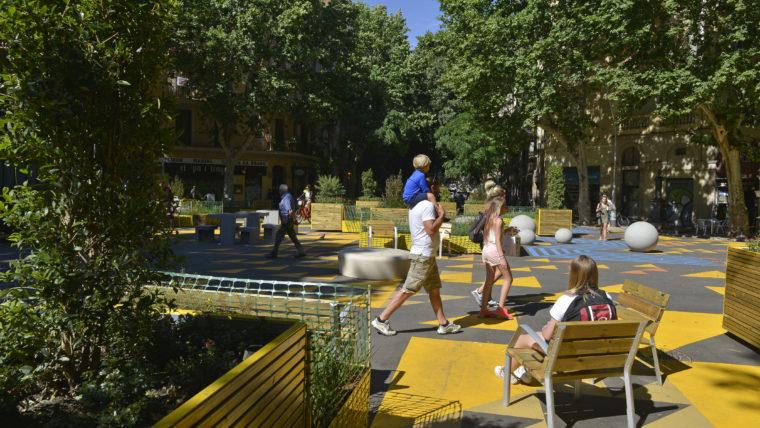
Figure 2. Barcelona's Superblock - Source: barcelona.cat
Slovakian cities, Kosice and Tarna also took social vulnerability aspects into consideration during the development of adaptation measures, as the location of vulnerable groups such as elderly people and children, and facilities serving them were also considered. Barcelona took a holistic approach as well: along with the development of its ‘Superblocks’ (Figure 1)., they are aiming to reduce traffic and pollution, greening and opening up streets for pedestrians and local businesses. Among others, further examples can be found in the Network Nature, Climate Adapt and C40 Cities databases.
References:
-
EEA, 2020: European Environment Agency, Kaźmierczak, A., Urban adaptation in Europe : how cities and towns respond to climate change, Publications Office, 2020, https://data.europa.eu/doi/10.2800/324620
-
EPA: United States Environmental Protection Agency – Heat Island Effect: https://www.epa.gov/heatislands
-
IPCC, 2022: Dodman, D., B. Hayward, M. Pelling, V. Castan Broto, W. Chow, E. Chu, R. Dawson, L. Khirfan, T. McPhearson, A. Prakash,Y. Zheng, and G. Ziervogel, 2022: Cities, Settlements and Key Infrastructure. In: Climate Change 2022: Impacts, Adaptation and Vulnerability. Contribution of Working Group II to the Sixth Assessment Report of the Intergovernmental Panel on Climate Change [H.-O. Pörtner, D.C. Roberts, M. Tignor, E.S. Poloczanska, K. Mintenbeck, A. Alegría, M. Craig, S. Langsdorf, S. Löschke, V. Möller, A. Okem, B. Rama (eds.)]. Cambridge University Press, Cambridge, UK and New York, NY, USA, pp. 907–1040, doi:10.1017/9781009325844.008.
-
The Guardian: Over 20,000 died in western Europe’s summer heatwaves, figures show; https://www.theguardian.com/environment/2022/nov/24/over-20000-died-western-europe-heatwaves-figures-climate-crisis
-
Climate Adapt: Urban Adaptation Support Tool
https://climate-adapt.eea.europa.eu/en/knowledge//tools/urban-ast/step-0-3 -
Network Nature - Database of EU research and innovation projects on nature-based solutions: https://networknature.eu/ridb?field_ridb_societal_challenges_tid=3495&field_ridb_approach_tid=All&field_ridb_environment_tid=3497&field_ridb_programme_tid=All&field_ridb_nbs_type_tid=All&combine=
-
C40 Cities: https://www.c40.org/cities/
-
Info Barcelona - Superblocks are having positive effects on health and well-being: https://www.barcelona.cat/infobarcelona/en/tema/urban-planning-and-infrastructures/superblocks-are-having-positive-effects-on-health-and-well-being_1097301.html
-
Land8: Landscape Architects Network - How Landscape Architecture Mitigates the Urban Heat Island Effect https://land8.com/how-landscape-architecture-mitigates-the-urban-heat-island-effect/
1. RCP 8.5: In the RCP 8.5 scenario GHG emissions continue to rise throughout the 21st century, with an increase of about 4.3 °C by 2100. The probability of the RCP 8.5 scenario is debated by scientists, as its development was based on an overestimation of projected coal burning. This worst-case scenario is often used for awareness-raising, showing potential risks of low-likelihood, high-impact events. (EEA, 2020)
