We all like to dress fashionably and regularly buy new clothes to do so. However, we don't often think about the environmental impact of producing affordable pieces that follow the often-changing trends, and the human rights issues that arise. In this article, we list the most serious of these and give you tips on how to dress consciously so you can look good while also protecting the planet.
Water waste, pollution and low recyclability
You would never guess that the textile industry is one of the most polluting industries in the world. A lot of water and land is used to grow cotton and other fibres. It is estimated that the global textile and clothing industry uses 79 trillion (!) litres of water annually. 2,700 litres of water is needed just to make a single cotton T-shirt, which is the equivalent of 2.5 years of drinking water for one person.
In addition to its huge water consumption, the fast fashion industry is also largely responsible for water pollution, contributing to 20% of wastewater production worldwide. According to estimations, 0.5 million tonnes of microfibres, that is, 35% of primary microplastics get into the oceans every year because of the washing of synthetic fabrics. Also, a single wash of polyester clothing can release 700,000 microplastic fibres that later enter the food chain.
But the long list of sins of the fast fashion industry doesn’t end there. It is estimated to be responsible for 10% of global carbon emissions, more than international flights and shipping combined. Data prove that textile purchases in the EU in 2017 resulted in around 654 kg of CO2 emissions per person.
Worldwide, only 1% of second-hand textiles are recycled into new clothes, and people are not so keen on reusing old clothing either. As a result, 87% of used clothes are burned or transported to landfills, and a large percent of newly produced clothing is discarded still with the tag on because of overproduction. This is particularly sad in light of the fact that these clothes are sewn by extremely underpaid staff, often minors, under inhumane conditions.
Tips and tricks for an environmentally friendly wardrobe
But what can we do if we don't want to contribute to the above-mentioned negative impacts, and prefer to dress in an environmentally friendly yet fashionable way? For example, there are thrift shops where you can find rare treasures at very reasonable prices. These will definitely not be seen on anyone else, and their rarity will allow you to express your individuality better. As with the thrift shops, it's also worth going treasure hunting at garage sales and charity shops.
You can shop from “slow fashion” designers who deliberately release only a small number of collections each year, eliminating overconsumption. They also use environmentally friendly production techniques and materials, and have an ethical attitude towards the workforce that produces the clothes. These pieces are usually more expensive, but their quality and timeless trendiness mean they can be worn for years, or even decades.
Besides all these, you can wear the same outfit twice; you don't have to buy a new one for every major occasion. If you still like to change things up a bit, go and take part in upcycling workshops where you can transform older pieces, or get a new collection at swap fairs, where you are also able to get rid of the clothes you no longer want.
All in all, the primary goal is that you neither throw away the clothes you've bought, nor buy new ones in a short time, but to keep them in the cycle. This way, you'll also save the planet from the polluting effects of the fast fashion industry, and you won't have to give up on trendy clothes either.
Black Friday
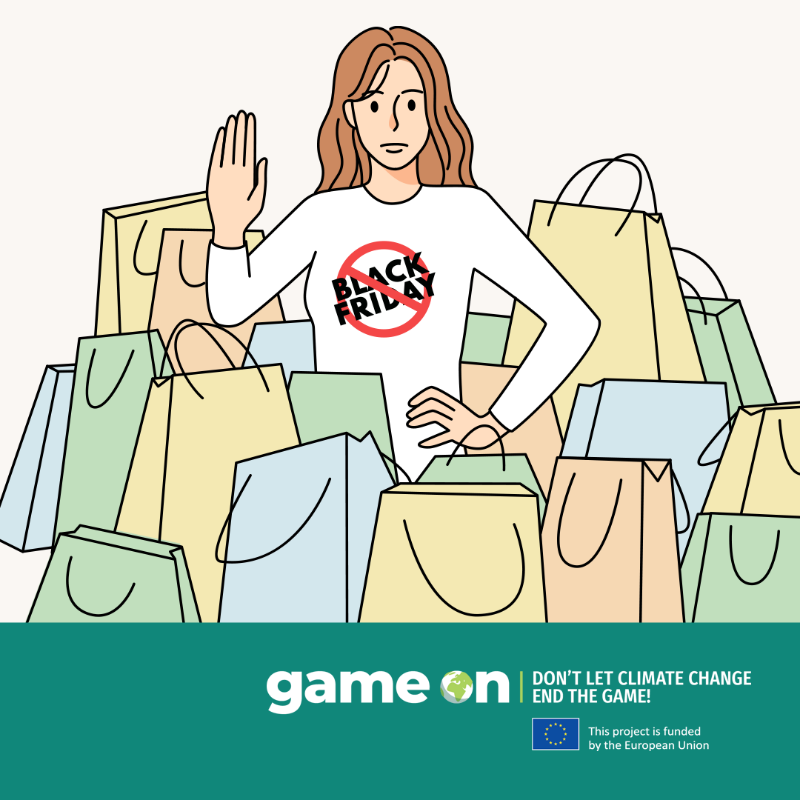
This year, Black Friday is expected to result in 429,000 metric tonnes of excess GHG emissions, equivalent to 435 London-New York return flights. So, it's not hard to see why this form of overconsumption is a huge environmental problem, alongside the waste that accumulates from the overstocking of products.
Promotions like this are also psychologically and financially damaging, as social and marketing pressures tend to make us buy unnecessary things, which can lead to overspending and, in severe cases, even shopping addiction and racking up debts.So, this Black Friday, attempt to keep the principles of sustainable consumption in mind when you see promotions: try to shop sensibly when you come across a sale and only buy the products you would have purchased anyway.
This way, you can keep the environmental impacts of the production and transport of goods to a minimum while also helping the economy.
And remember: if you don't buy anything this time, you save 100%.

Lithuanian MAINYTUVĖS movement
10% of CO2 emissions are generated by the fashion industry. Therefore, it is extremely important to keep existing pieces of clothing in the circle so that they won’t be discarded, and new ones aren’t produced in great quantities either. With the help of the Lithuanian MAINYTUVĖS movement (Lithuanian Fund for Nature), those who need a new collection or just want a quick dopamine fix by acquiring new clothes are able to pick their favourite donated pieces free of charge and can also drop off their own surplus clothes. Watch our video to find out more about this great initiative and to get a taste of the cheerful atmosphere at the swap meet.
The data mentioned in this article were taken from here.
Source: https://www.wastemanaged.co.uk/black-friday-waste/